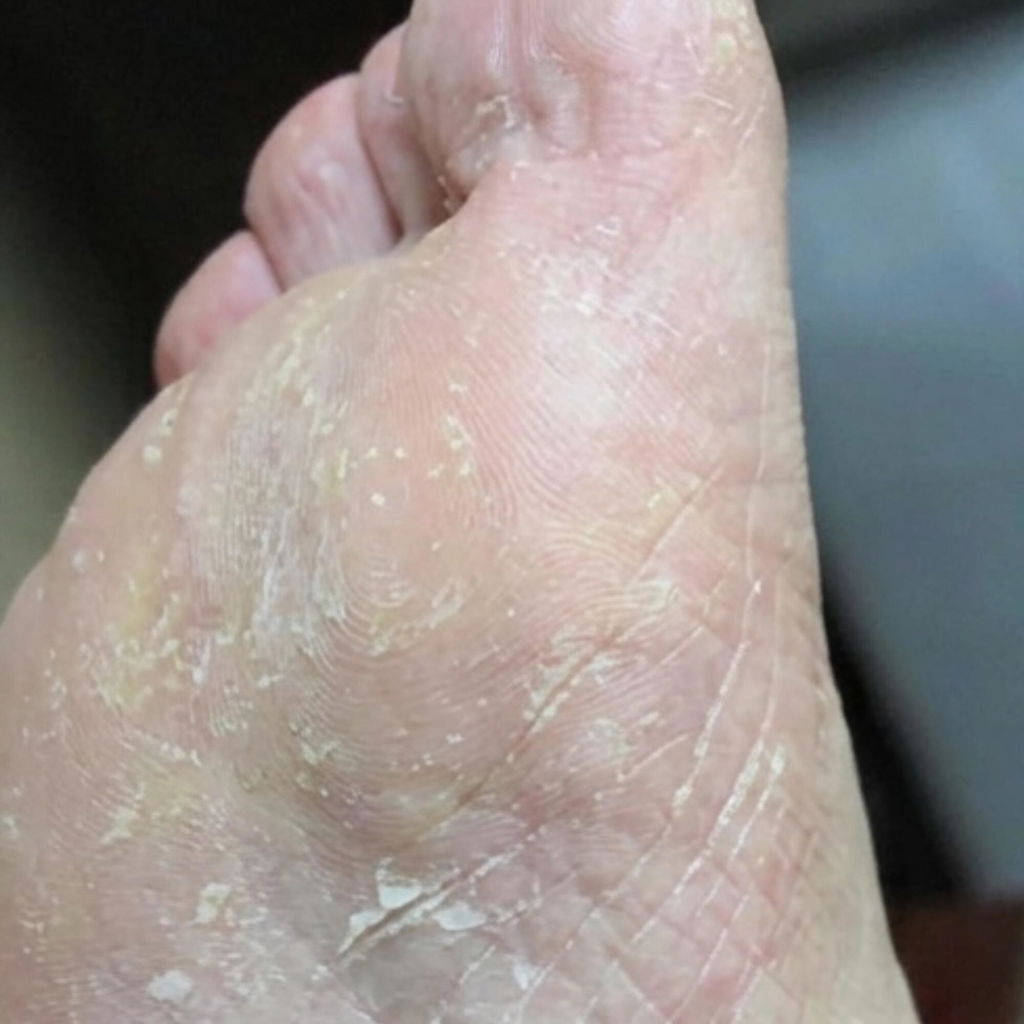
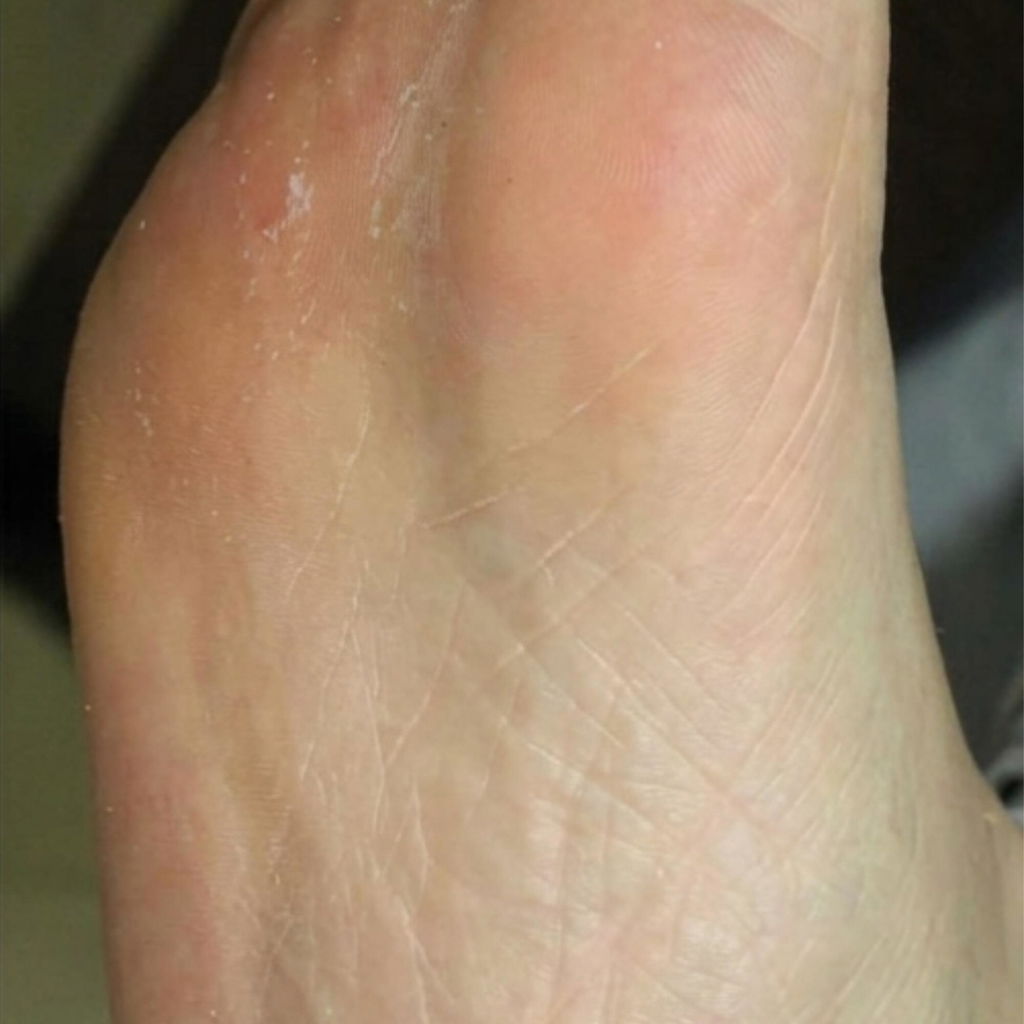
Foot stick for Dry & Callused Heels
Foot stick for Dry & Callused Heels
The clinical-grade secret that chemically dissolves deep, callused heel cracks without greasy lotion. Same concentration used by podiatrists.
Low stock
Köp mer, Spara mer
Get rid of annoying and painful cracked feet today!
Couldn't load pickup availability
- Master payment method
- Visa payment method
- American express payment method
- Apple pay payment method
- Google pay payment method
- Swish payment method
- Klarna payment method
Get it between - and -.
We offer FREE shipping on all orders. Estimated shipping time to your location is located above the folder.
🛡️ The 30-Day "Smooth Heel" Risk-Free Guarantee.
Keep it on your nightstand. Swipe it over your worst cracks. If you don't wake up to heels that are visibly healing. Let us know within 30 days for a FULL REFUND.
UNCAP 🔓
Twist off the cap
ROLL 🦶
Glide it directly over your calluses or dry skin.
SLEEP 😴
The solid wax seals it in and works all night.
ENJOY ✨
Enjoy smooth and healthy skin that lasts.
Amount: 40 g
INCI INGREDIENTS
Urea, Mineral oil, Mineral Grease, Earth Wax, White Beeswax, Ethyl Hexyl Palmitate, Olea Europaea Fruit Oil, Jojoba (Simmondsia Chinensis) Seed Oil, Butyrospermum Parkii Fruit Fat, Aloe Vera In Curacao Barbadensis Extract, Salicylic Acid. Other Trace Ingredients: (Daily) Essence, Hydroxyphenyl Propyl Ester, CI 19140
Avoid accidentally entering the eyes, If accidentally entering the eyes, immediately rinse with plenty of water. Everyone has different skin charecteristics. If you feel uncomfortable or have abnormal skin reactions during use, please stop using or consult a dermatologist. Please keep out of reach of infants and young children, and seal promptly after use. Contains salicylic acid. Do not use for children under three years old. Use together with sunscreen cosmetics. Do not swallow.
-

My heels were so cracked every step hurt, like stepping on glass. I used the foot stick for a month and the deep cracks completely peeled off.
-

Very satisfied with my now beautiful heels. I actually started using Eucerin repair after 3 weeks of using this advanced foot stick.
-

My heel literally snagged our new sheets and pulled a thread loose. It sounded like sandpaper. This stick changed everything, 5 seconds to apply and now my feet are smooth like a baby.


Foot stick for Dry & Callused Heels


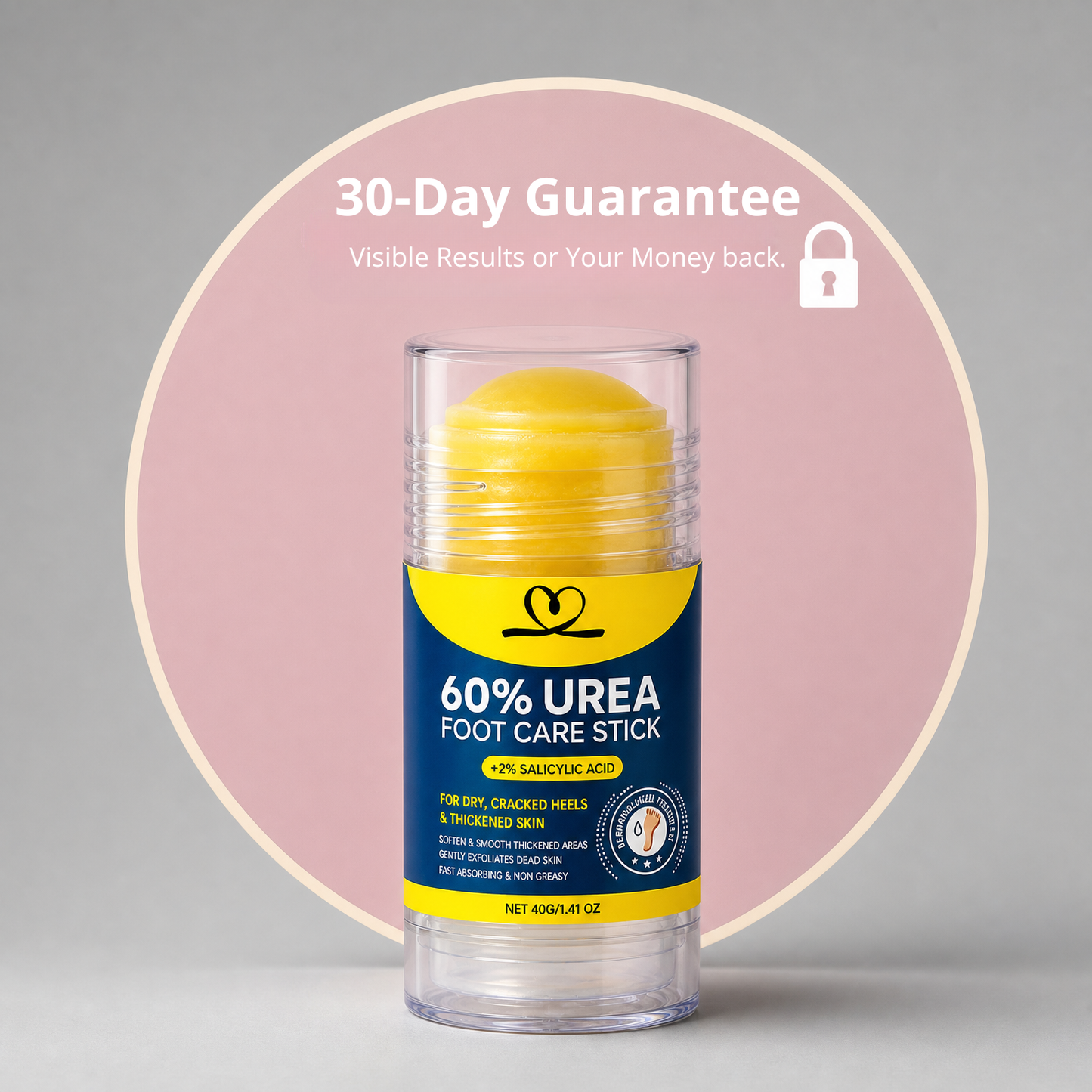

The Real Enemy Isn't Dry Skin.
Walking, standing, and mechanical stress causes your feet to want to protect themselves. This creates an overproduction of a thick protein shield clinically known as hyperkeratosis. We call it the Keratin Barrier: a brick wall of dead tissue.
Applying a standard foot cream to a wall like that is like watering a brick wall and expecting it to turn to mud. The water evaporates. The wall remains. Hours later, the crack splits open again.

You've been sold the wrong dose.
Research Shows You Need at Least 30–60% Urea to Break Down the Keratin Wall
Mass-market brands cap their formulas at 5–10%. That guarantees surface-level lubrication for a day or two, an empty tube, and a trip back to the pharmacy next month.
The Unzip & Digest Protocol
The two-part approach for getting baby-soft feet again.

"The Unzipper"
Salicylic acid removes hardened, dead skin.
"Digestern"
60% urea breaks down excess keratin

Salicylic Acid
Before skin can soften, dead and hardened cells must first be loosened. Salicylic acid dissolves the bonds called desmosomes that hold these dead cells together.

60% Urea
Once salicylic acid loosens the dead cells, 60% urea can reach the hardened layers more effectively and break down excess keratin so the callus can shed, while leaving the healthy skin underneath safe.
 Tjocka förhårdnader
Really dry skin
Har du provat urea krämer under 30%
Har du provat pimpsten
You've tried the "greasy sock" routine
Thousands wasted on pedicures
Normal creams seem to just sit on top
Who Is Footstick for Dry & Callused Heels Best For?
-

Fixed the root problem
I thought my callused heels just looked the way they did. I am usually not wrong about things, but it turns out this product fixes the root cause.

-

Peeled off my calluses
Prior creams only provided temporary fix, this Footstick made a lasting difference. I’m so thankful!

-

Will continue to use
I learned the hard way that big skincare companies were holding back the best dosages... This footstick effortlessly delivers the perfect protocol.


Use: Swipe directly onto clean and dry heels every night before bed. Use consistently for 30 days, then switch to 2–3x/week for maintenance.

-
Week 1
Instant softening. Tightness starts to ease.
-
Week 2
Rough patches flake off. Smoother texture.
-
Week 3
Deep cracks start closing. Calluses thin out.
-
Week 4-6
Smooth, pain-free heels. Cracks healed.
Your Questions, Answered Honestly
Is 60% urea too strong?
Is 60% urea too strong?
No. The 60% threshold targets dead, callused tissue, not living skin. And the anhydrous wax base is formulated to sit on the callused area without stinging healthy skin. As with any high-strength active, avoid applying directly onto broken, actively bleeding skin and discontinue if irritation occurs.
Will my cracks just come back once I stop using it?
Will my cracks just come back once I stop using it?
Cracked heels are driven by ongoing mechanical stress, so like any skincare routine, results are maintained with continued use. We found that our customers got the best results when they had intensive treatment for a short period of time with the fotstick to break down that stubborn keratin-barrier, followed by Eucerin Advanced Repair for daily long-term use afterwards.
I've tried everything already. Why would this work when prescription creams didn't?
I've tried everything already. Why would this work when prescription creams didn't?
Most past treatments topped out at 10–20% urea, a moisturizing dose, not a debriding one. The Footstick combines a 60% clinical threshold with 2% salicylic acid to unglue and digest the keratin buildup itself, not just hydrate over it.
Price feels like a lot more than a drugstore tube. Why?
Price feels like a lot more than a drugstore tube. Why?
A single medical pedicure runs between $75 and $200 and wears off within a week. The Fotstick is a clinical-strength, multi-week treatment designed to address the root cause rather than offer temporary surface relief.
Fungerar den på känslig hy?
Fungerar den på känslig hy?
Yes, this foot stick is safe for sensitive skin but should only be applied to hardened and calloused areas. Never use it directly on open or bleeding cracks.
What if I'm not satisfied with the results?
What if I'm not satisfied with the results?
For best results, use a thin layer of the product every day before bed. If your feet are not smoother and less callused within 30 days, you are eligible for a full refund.
Some people may need to use the product for longer to achieve their desired results.
With daily use one stick typically lasts one month. For very dry and callused heels, we recommend the 3-pack.